Healthcare organizations are rapidly adopting AI agents for clinical decision support, patient communication, and administrative automation. However, the sensitive nature of protected health information (PHI) and the potential for patient harm require rigorous security and governance frameworks.
Regulatory Requirements
Healthcare AI must comply with:
- HIPAA: Privacy and security of protected health information
- HITECH: Electronic health records and breach notification
- FDA Guidance: Software as a Medical Device (SaMD) regulations
- State Laws: Varying requirements for AI in clinical settings
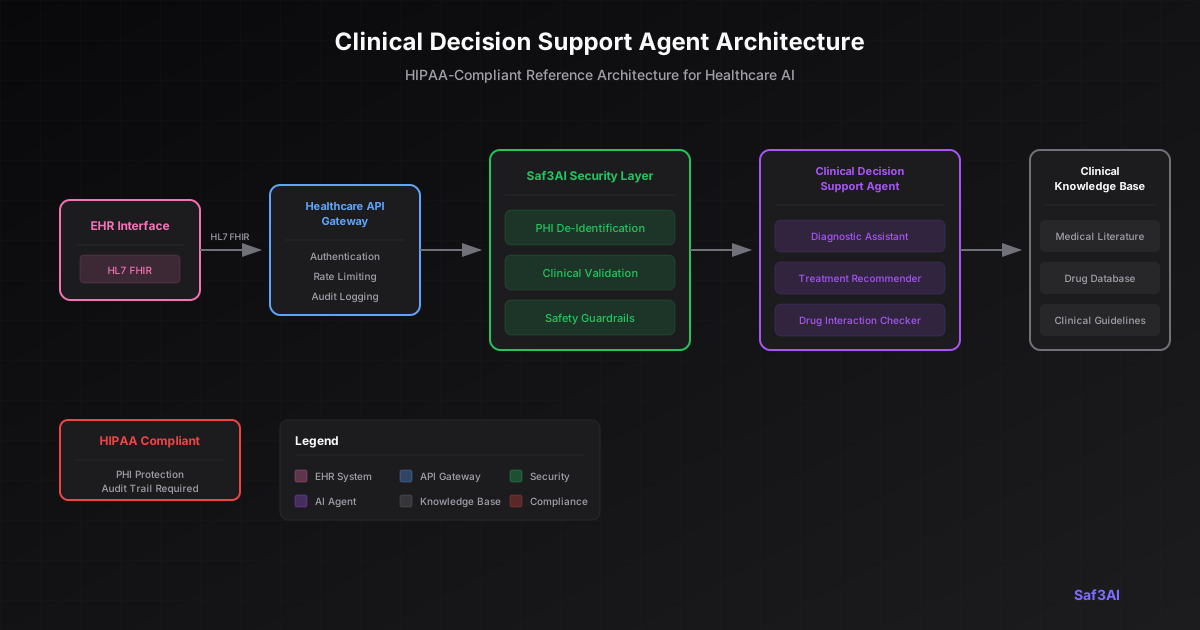
Reference Architecture: Clinical Decision Support Agent
PHI Protection Strategy
De-identification Pipeline
Before any patient data reaches the AI agent:
class PHIDeidentifier:
    def process(self, clinical_note):
        # Remove direct identifiers
        note = self.remove_names(clinical_note)
        note = self.remove_dates(note)
        note = self.remove_mrns(note)
        note = self.remove_locations(note)

        # Apply Safe Harbor method
        note = self.apply_safe_harbor(note)

        # Generate linkage token for re-identification
        token = self.generate_secure_token()

        return note, token
Minimum Necessary Principle
AI agents should only access the minimum PHI required:
- Clinical decision support: Relevant diagnoses, medications, labs
- Scheduling agents: Name, contact, appointment preferences only
- Billing agents: Procedure codes, not clinical notes
Patient Engagement Agent
For AI chatbots handling patient inquiries:
Patient Message → Saf3AI Gateway → Intent Classification →
PHI Detection & Masking → Response Generation →
Clinical Review (if needed) → Response Delivery
Safety Guardrails
Critical safety controls for patient-facing agents:
- Emergency Detection: Automatically escalate life-threatening symptoms
- Scope Limitations: Never diagnose, only provide general information
- Provider Referral: Always recommend professional consultation
- Medication Warnings: Flag potential adverse interactions
EMERGENCY_KEYWORDS = [
    "chest pain", "difficulty breathing", "stroke symptoms",
    "severe bleeding", "unconscious", "suicidal thoughts"
]

def check_emergency(message):
    if any(keyword in message.lower() for keyword in EMERGENCY_KEYWORDS):
        return EmergencyResponse(
            message="Please call 911 or go to your nearest emergency room.",
            escalate=True,
            notify_care_team=True
        )
Medical Research Agent
For AI agents assisting with clinical research:
Data Governance
- IRB approval required before AI access to patient data
- Consent verification for each data use
- Aggregate results only, no individual patient data in outputs
Architecture
Research Query → IRB Approval Check → Cohort Builder →
De-identified Data Access → Analysis Agent →
Results Aggregation → Statistical Disclosure Control →
Research Output
Audit and Compliance
Required Audit Events
Every AI interaction must log:
- User identity and role
- Patient context (MRN hash, not actual MRN)
- Data accessed (categories, not content)
- AI recommendations generated
- Actions taken by clinician
- Timestamp and session context
Compliance Dashboard
Saf3AI provides real-time visibility into:
- PHI access patterns
- Anomalous query detection
- Compliance violation alerts
- Audit report generation
Implementation Checklist
- Implement PHI de-identification pipeline
- Configure minimum necessary data access policies
- Deploy emergency detection guardrails
- Set up clinical review workflows
- Establish audit logging per HIPAA requirements
- Create BAA with AI/LLM providers
- Document AI models for FDA compliance (if SaMD)
- Train staff on AI agent limitations
Conclusion
Healthcare AI agents offer tremendous potential for improving patient outcomes and operational efficiency. By implementing proper PHI protection, safety guardrails, and compliance frameworks, organizations can deploy AI agents while maintaining HIPAA compliance and patient trust. Saf3AI provides the security and observability layer needed for healthcare-grade AI deployments.