As AI adoption accelerates, so does regulatory scrutiny. Organizations deploying AI agents must navigate an increasingly complex landscape of governance requirements, from industry-specific regulations to emerging AI-specific laws. This guide breaks down what you need to know.
The Regulatory Landscape
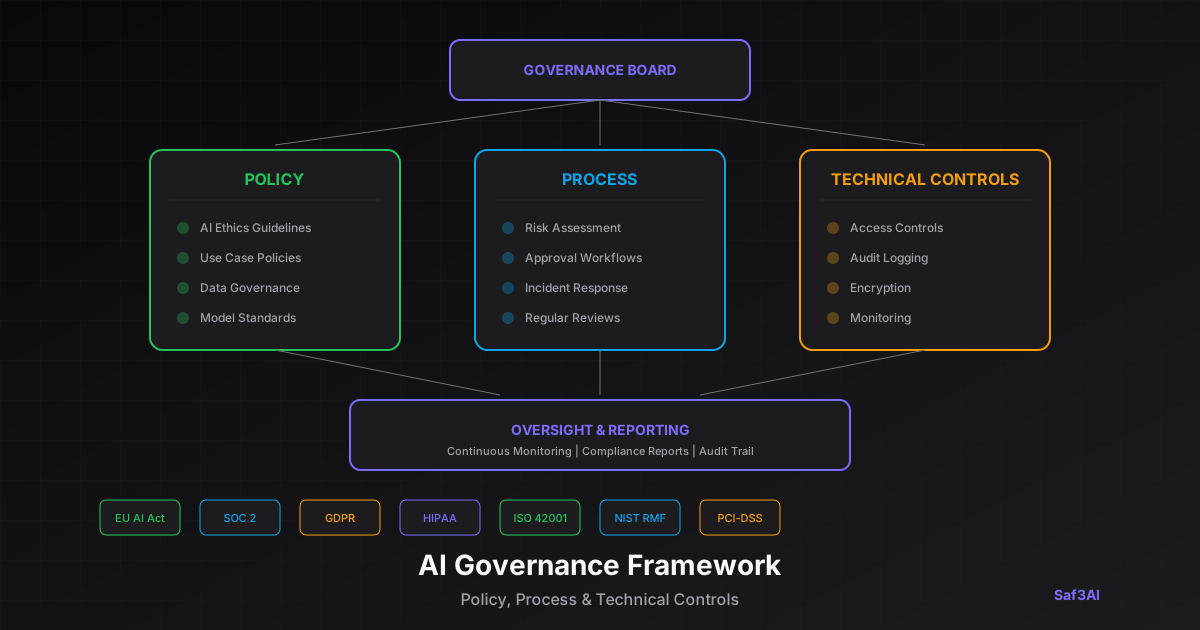
The AI regulatory environment is multi-layered, with global, regional, and industry-specific requirements:
Global Frameworks
| Framework | Scope | Key Requirements |
|---|---|---|
| EU AI Act | All AI systems in EU | Risk classification, conformity assessment |
| NIST AI RMF | US Federal guidance | Risk management, documentation |
| ISO/IEC 42001 | International standard | AI management system certification |
Industry-Specific Regulations
| Regulation | Industry | AI Implications |
|---|---|---|
| HIPAA | Healthcare | Patient data in AI training/inference |
| SOC 2 | SaaS | Security controls for AI systems |
| PCI-DSS | Finance | AI handling payment data |
| GDPR | All (EU data) | Right to explanation, data minimization |
Building a Governance Framework
A comprehensive AI governance framework addresses three interconnected pillars:
1. Policy
Documented guidelines that define acceptable AI use:
Key Policies:
- AI Ethics Guidelines - Principles for responsible AI use
- Use Case Policies - Approved/prohibited AI applications
- Data Governance - Rules for training data and PII
- Model Standards - Requirements for model selection and deployment
2. Process
Repeatable procedures for managing AI systems:
Essential Processes:
- Risk Assessment - Evaluate risks before deployment
- Approval Workflows - Structured review and sign-off
- Incident Response - Handle AI-related incidents
- Regular Reviews - Ongoing compliance verification
3. Technical Controls
Automated enforcement of governance requirements:
Control Categories:
- Access Controls - Who can use/modify AI systems
- Audit Logging - Complete activity records
- Encryption - Data protection at rest and in transit
- Monitoring - Continuous compliance verification
Risk Classification
The EU AI Act introduces a risk-based approach that’s becoming a global standard:
Unacceptable Risk (Prohibited)
- Social scoring systems
- Subliminal manipulation
- Exploitation of vulnerabilities
- Real-time biometric identification in public
High Risk (Strict Requirements)
Applications in critical areas require:
- Conformity assessment
- Risk management system
- Data quality standards
- Human oversight
- Transparency documentation
Examples: HR/Recruitment AI, Credit scoring, Educational assessment
Limited Risk (Transparency Required)
Users must be informed:
- That they’re interacting with AI
- How decisions are made
- Options to opt out
Examples: Chatbots, Content recommendation, Emotion recognition
Minimal Risk (No Restrictions)
Normal operation permitted:
- AI-enabled games
- Spam filters
- Internal productivity tools
Human Oversight Models
Governance frameworks typically require meaningful human oversight:
Level 1: Human-in-the-Loop
Every action requires explicit human approval.
- Use for: High-risk decisions, sensitive domains
- Flow: AI recommends → Human decides → Action taken
Level 2: Human-on-the-Loop
AI acts autonomously but humans can intervene.
- Use for: Medium-risk, time-sensitive operations
- Flow: AI acts → Human monitors → Override if needed
Level 3: Human-out-of-the-Loop
Fully autonomous with retrospective oversight.
- Use for: Low-risk, high-volume operations
- Flow: AI acts → Logs recorded → Periodic review
Documentation Requirements
Proper documentation is critical for demonstrating compliance:
System Documentation
- System architecture diagrams
- Data flow documentation
- Model cards for each AI model
- Training data provenance
- Security controls documentation
Risk Documentation
- Risk assessment reports
- Impact assessments (DPIA, AIIA)
- Mitigation strategies
- Residual risk acceptance
Operational Documentation
- Standard operating procedures
- Incident response plans
- Change management logs
- Access control records
- Audit trails
Testing Documentation
- Evaluation results and benchmarks
- Red team testing reports
- Bias and fairness assessments
- Security penetration tests
Compliance Checklist
Use this checklist to assess your AI compliance readiness:
Governance
- AI governance board established
- Roles and responsibilities defined
- Policies documented and communicated
- Regular governance reviews scheduled
Risk Management
- AI systems inventoried and classified
- Risk assessments completed
- Mitigation controls implemented
- Residual risks documented
Technical Controls
- Access controls implemented
- Audit logging enabled
- Encryption at rest and in transit
- Security monitoring active
- Incident response plan tested
Transparency
- AI disclosure to users
- Explanation capabilities
- Opt-out mechanisms
- Privacy notices updated
Testing
- Bias and fairness testing
- Red team security testing
- Regular evaluation cycles
- Results documented
Key Takeaways
- Start with governance - Technical controls are only effective with proper governance
- Classify your risks - Not all AI systems require the same level of oversight
- Document everything - If it’s not documented, it didn’t happen
- Build in human oversight - Appropriate to the risk level of each system
- Plan for audits - Maintain audit trails that demonstrate compliance
Compliance isn’t just about avoiding fines—it’s about building AI systems that users and stakeholders can trust.
Need help meeting AI compliance requirements? Schedule a demo to see how Saf3AI’s governance tools can help.